 FR
FR
 MG
MG
 EN
EN
0
mesh networks
A decentralized network at the village scale enabling productive use of electricity.
 Nanoé
Nanoé
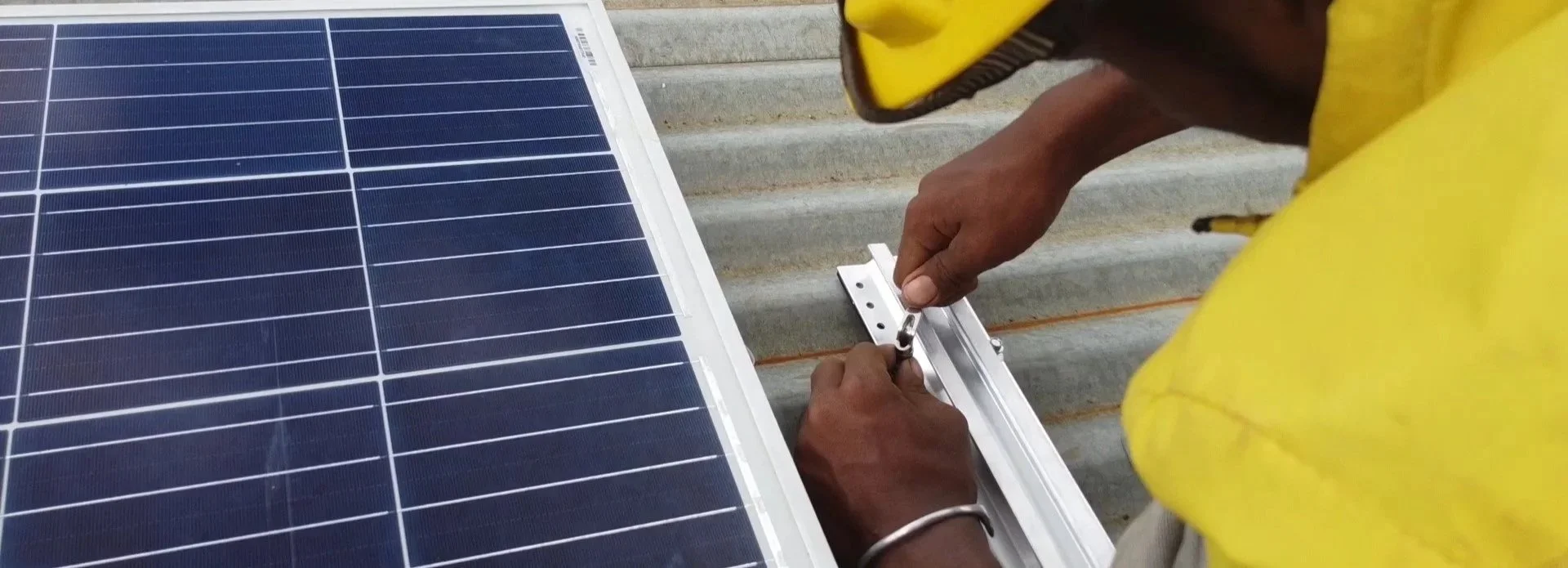
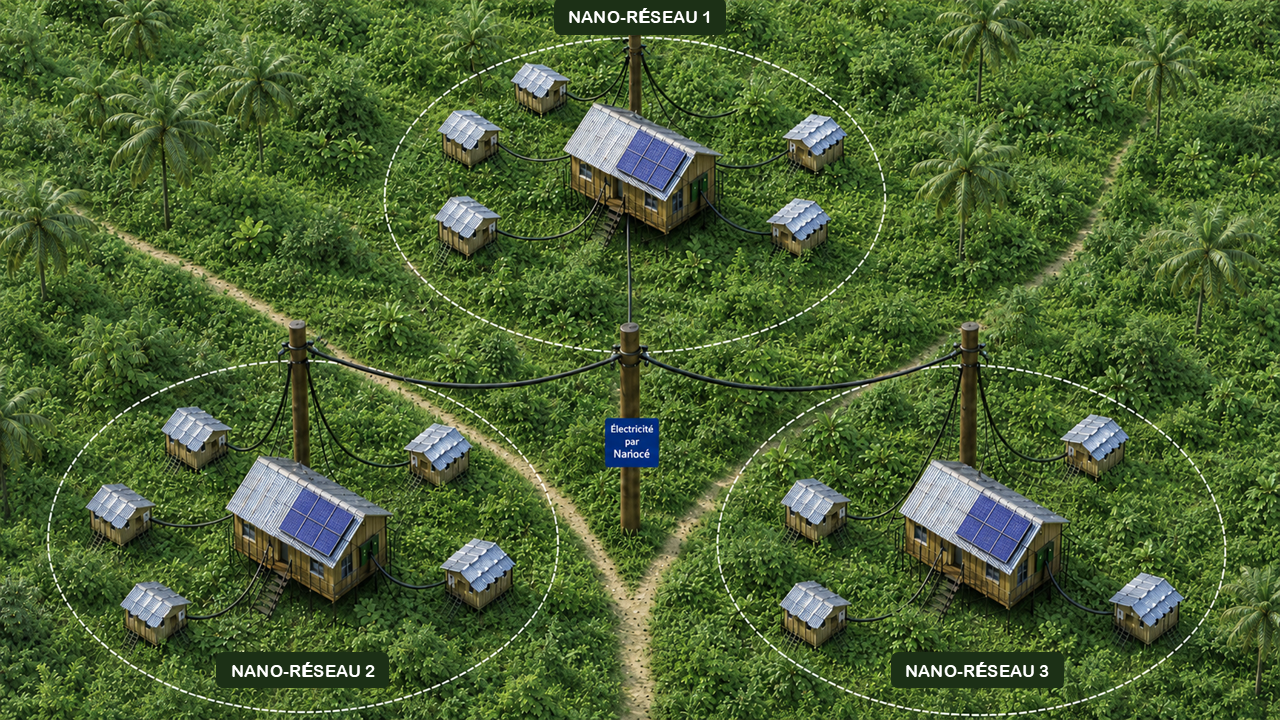
Nanoé deploys autonomous solar nano-grids to progressively electrify villages not connected to the national grid. As demand grows, these installations interconnect to form mesh networks.
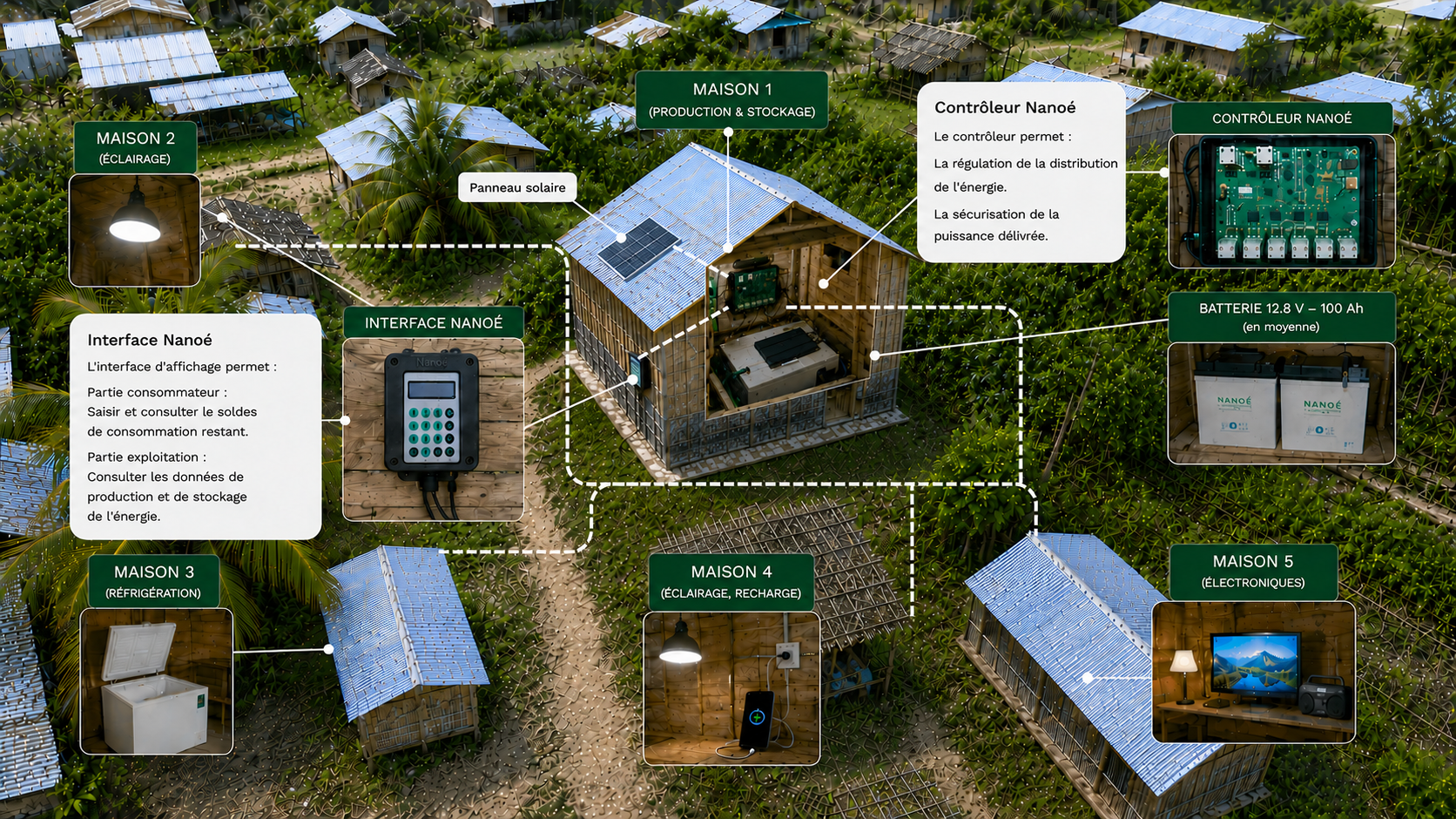
Nano-grids are the building blocks of the Nanoé model.
They are smart collective solar systems, operating in direct current (DC), supplying a small group of users (4 to 6 households).
Access to electricity is provided through a prepaid system, allowing users to consume a service adapted to domestic uses (lighting, charging, multimedia, refrigeration).
These installations are designed to be modular and interconnectable, allowing them to evolve into larger-capacity networks.
Mesh networks rely on interconnecting multiple nano-grids through a 72 V DC BUS to pool production and increase system capacity at the village scale.
This architecture allows the integration of AC connection points dedicated to uses requiring higher power, such as productive activities or community infrastructure.
Mesh networks represent an intermediate step between individual off-grid systems and larger-scale electrical infrastructure.
Catherine, a shopkeeper in a village served by Nanoé, shares the tangible impact of access to electricity on her daily business.

Energica extends the Nanoé model to alternating current (AC) infrastructure, enabling higher-power uses.
These autonomous solar installations meet productive needs identified in villages, such as agricultural processing, crafts, or digital services.
In 2025, Nanoé deploys three initial sites showcasing the development of energy solutions dedicated to local economic uses.